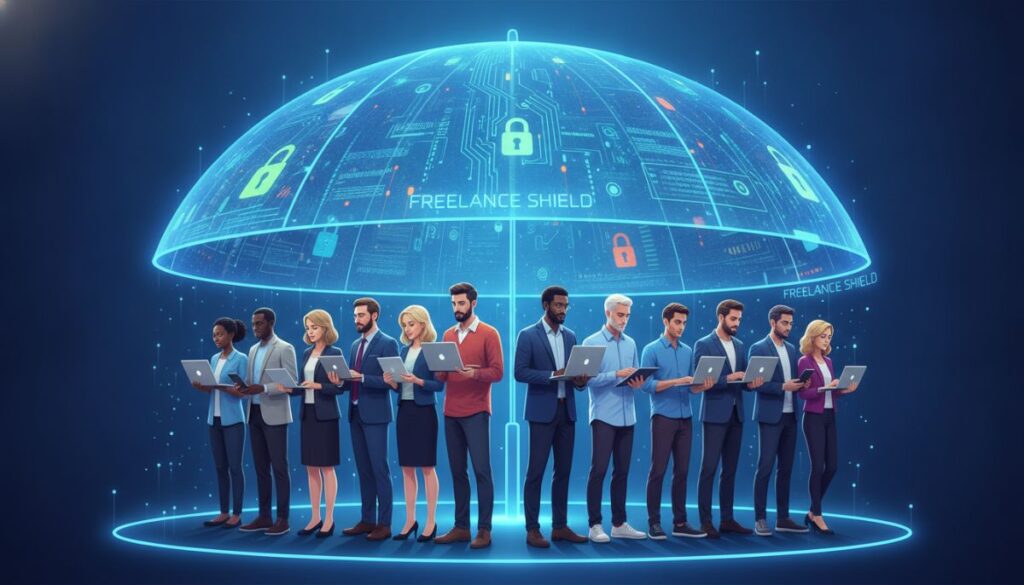
The global labor landscape is undergoing a monumental paradigm shift. The traditional 9-to-5 employment model, once considered the bedrock of financial stability, is increasingly yielding ground to the gig economy. Millions of skilled professionals worldwide are choosing the autonomy, flexibility, and diverse opportunities of independent work. However, this newly found professional freedom comes with a significant trade-off: the loss of corporate-sponsored safety nets.
Without employer-provided health insurance, paid sick leave, disability benefits, or liability coverage, independent workers are highly vulnerable to sudden financial shocks. A single illness, a damaged piece of equipment, or a contract dispute can instantly jeopardize a freelancer’s livelihood. To bridge this critical protection gap, a revolutionary financial mechanism has emerged: Micro-Insurance for Freelancers. This guide explores the intricate details, benefits, and strategic importance of micro-insurance, illustrating how it serves as an indispensable tool for the modern self-employed professional.
Understanding the Concept of Micro-Insurance for Freelancers
Traditional insurance models are inherently designed for large corporate entities or salaried individuals with predictable monthly incomes. These policies often demand high, rigid premiums, long-term contractual commitments, and extensive underwriting processes. For a freelancer with fluctuating monthly revenues, such financial commitments are often impractical and unsustainable.
Micro-insurance addresses these structural barriers by offering low-premium, high-flexibility insurance products tailored to the exact risk profiles and financial realities of independent contractors. Characterized by simplified underwriting, bite-sized premiums, and digital-first delivery, micro-insurance provides targeted coverage for specific risks over shorter durations. By aligning insurance costs directly with freelance projects, micro-insurance democratizes financial security for gig workers globally.
Why Traditional Insurance Fails the Modern Gig Worker
The fundamental mismatch between traditional insurance structures and the freelance lifestyle lies in operational rigidity. Traditional policies operate on an annual cycle with fixed premium schedules. If an independent graphic designer experiences a low-revenue month, paying a substantial fixed insurance premium becomes a severe burden.
Furthermore, traditional commercial insurance often requires proof of business scale, physical storefronts, or high minimum revenues—criteria that home-based freelancers cannot meet. Micro-insurance dismantles these hurdles. It leverages modern digital technology and data analytics to offer pay-as-you-go models, allowing freelancers to activate coverage only when they are actively working on a contract and pause it during dry spells.
Key Types of Micro-Insurance for Freelancers
To build a resilient freelance business, it is essential to understand the specific categories of micro-insurance available in the market. Each category is engineered to mitigate distinct operational and personal risks.
1. Micro-Health and Disability Insurance
Unlike corporate employees who enjoy comprehensive medical packages, freelancers face a direct correlation between their physical health and their income. If a freelancer cannot work due to an illness or injury, their revenue stops immediately. Micro-health insurance plans focus on offering affordable, high-impact coverage for hospitalization, emergency treatments, or critical illnesses. Some advanced micro-insurance policies also include short-term disability cover, which provides daily cash payouts during recovery to offset lost income.
2. Professional Indemnity and Liability Micro-Insurance
In the professional service sector, freelancers face the risk of client litigation. A developer might accidentally introduce a bug that crashes a client’s website, or a copywriter might inadvertently commit a copyright violation. Professional indemnity micro-insurance covers legal defense costs and damages awarded in civil lawsuits. What makes micro-indemnity insurance unique is its project-based nature; a freelancer can purchase coverage specifically for the duration of a high-risk project rather than maintaining an expensive annual policy.
3. Business Equipment and Asset Protection
For many freelancers, their primary assets are digital. A photographer relies on premium cameras, a video editor requires high-end workstations, and a programmer depends entirely on a high-performance laptop. If these tools are stolen, damaged, or lost, business operations grind to a halt. Micro-insurance for assets provides rapid valuation and replacement payouts, ensuring minimal downtime without requiring complex commercial property insurance setups.
4. Business Interruption and Income Protection
Unforeseen events, ranging from natural disasters to client bankruptcies, can abruptly halt ongoing contracts. Business interruption micro-insurance is designed to pay out a pre-agreed daily sum during periods when a freelancer is physically or operationally unable to conduct business, providing an essential financial cushion during volatile market phases.
Comparative Analysis: Traditional Insurance vs. Micro-Insurance
To clearly understand how micro-insurance redefines risk management for independent contractors, examine the comparative data below:
| Feature | Traditional Insurance | Micro-Insurance for Freelancers |
|---|---|---|
| Premium Cost | High, fixed annual or monthly rates | Low, flexible, or project-based micro-premiums |
| Coverage Scope | Broad, standardized, often with unnecessary inclusions | Highly targeted, modular, and customized for gig risks |
| Commitment Term | Strict annual contracts | On-demand (daily, weekly, monthly, or project-based) |
| Underwriting Process | Lengthy, document-heavy, manual | Rapid, digital-first, often powered by AI algorithms |
| Claims Payout | Complex, requiring weeks of manual verification | Accelerated, often automated through parametric triggers |
The Strategic Benefits of Micro-Insurance for Freelancers
Investing in micro-insurance is not merely a defensive operational cost; it is a strategic business decision that enhances professional credibility and long-term viability.
“For the independent workforce, financial resilience is not built through massive, rigid safety nets, but through agile, bite-sized micro-insurance solutions that adapt to the unpredictable rhythms of freelance life.”
By securing tailored coverage, freelancers can experience several operational advantages:
- Enhanced Client Trust: Many high-value corporate clients require external vendors to carry liability or indemnity insurance. Presenting a micro-insurance certificate for a project demonstrates professionalism and significantly increases a freelancer’s chances of winning lucrative corporate contracts.
- Stress Reduction and Focus: Financial anxiety is a primary driver of burnout in the freelance community. Knowing that health crises or equipment failures will not lead to bankruptcy allows freelancers to focus on delivering high-quality creative work.
- Cash Flow Optimization: Instead of locked-in capital, pay-as-you-go micro-insurance enables freelancers to allocate their capital dynamically, investing in marketing, software, and skills development during critical growth phases.
How to Select the Ideal Micro-Insurance Policy
Choosing the right micro-insurance requires a systematic assessment of your specific business risks. A graphic designer’s risk profile is entirely different from that of an independent delivery courier.
First, list your most critical vulnerabilities. If your work relies heavily on specialized physical equipment, prioritize asset protection. If you handle sensitive client data, prioritize cybersecurity or professional indemnity cover. Second, seek out specialized insurtech platforms that explicitly target the gig economy. These providers are far more likely to offer modular, affordable, and flexible policies that traditional, legacy insurers do not support.

Real-World Implementation and the Future of Gig Worker Benefits
As the freelance economy continues its upward trajectory, the micro-insurance sector is evolving rapidly. We are seeing the rise of API-driven integrations, where freelancing platforms (such as Upwork, Fiverr, or ride-sharing apps) partner directly with insurtech companies. In the near future, freelancers may be able to opt-in to micro-insurance coverage directly from their platform dashboards with a single click, deducting micro-premiums automatically from their project earnings.
This level of seamless, embedded insurance represents the future of work. By lowering the barriers to entry, micro-insurance ensures that opting for an independent professional path no longer means compromising on fundamental human and financial security.
FAQ
What exactly is micro-insurance for freelancers?
Micro-insurance for freelancers refers to specialized, low-cost, and highly flexible insurance products designed to cover specific risks faced by independent professionals. Unlike traditional coverage, it features low premiums, short-term commitments, and simplified digital claims processes.
Can I get micro-insurance for short-term projects only?
Yes, one of the primary benefits of micro-insurance for freelancers is its flexible duration. Many insurtech providers offer on-demand coverage that can protect you for a single day, a specific project, or a billing cycle, allowing you to pay only when you are actively working.
Is micro-insurance sufficient to replace traditional health insurance?
Micro-insurance is designed to plug specific financial gaps and offer primary protection against minor crises. While it provides vital, cost-effective relief, it may not replace comprehensive major medical health insurance. However, it serves as an excellent supplementary tool or an affordable alternative for freelancers who cannot fit traditional premiums into their variable budgets.
How do I file a claim under a micro-insurance policy?
Claims are typically filed digitally through a mobile application or an online portal. Because many micro-insurance providers utilize automated or parametric systems, you only need to upload basic digital proof (such as a medical invoice or contract cancellation notice) to receive rapid, often near-instantaneous, payouts.




Leave a Reply