
Introduction
The global corporate landscape is undergoing a monumental paradigm shift. As climate change, social inequality, and corporate governance failures dominate headlines, businesses are increasingly scrutinized not just for their financial returns, but for their broader impact on society and the environment. In response, Environmental, Social, and Governance (ESG) principles have transitioned from voluntary corporate social responsibility (CSR) initiatives to core strategic imperatives. Amidst this evolution, a pioneering financial instrument has emerged at the intersection of risk management and corporate sustainability: ESG-linked commercial insurance.
Traditional commercial insurance has historically focused on risk transfer—protecting a business against losses after an event has occurred. However, as systemic ESG risks become more volatile and costly, both insurers and policyholders are realizing that risk mitigation must be proactive rather than reactive. ESG-linked commercial insurance represents a revolutionary model where insurance policy pricing, terms, and coverage are directly tied to the policyholder’s verified ESG performance. This article explores how this innovative insurance model works, its benefits, the challenges it faces, and its transformative potential for the global economy.
What is ESG-Linked Commercial Insurance?
ESG-linked commercial insurance is a structured insurance product where the premium, deductible, or coverage terms fluctuate based on the policyholder’s ability to meet predefined ESG key performance indicators (KPIs) or overall ESG rating benchmarks. This mechanism mirrors the structure of ESG-linked loans and sustainability-linked bonds, which have already gained massive traction in global debt markets.
In this framework, an insurer partners with an enterprise to assess its specific risk profile and ESG maturity. The parties agree on a set of objective, measurable ESG targets. If the policyholder achieves or exceeds these targets within a specified timeframe, they are rewarded with financial incentives, such as reduced premiums or more favorable policy limits. Conversely, failing to meet these benchmarks can lead to higher premium rates or stricter policy conditions. This creates a powerful, continuous financial incentive for corporations to improve their sustainability footprint.
How Does ESG-Linked Commercial Insurance Work?
The operationalization of ESG-linked commercial insurance relies on a highly structured, data-driven cycle. It typically involves four critical phases:
1. Baseline Assessment and Underwriting: Insurers evaluate the client’s current ESG performance using proprietary risk models and third-party ESG rating agencies (such as MSCI, Sustainalytics, or S&P Global). This phase establishes the risk baseline.
2. KPI and Target Setting: The insurer and insured collaboratively define specific, material ESG goals. For environmental metrics, this might involve reducing greenhouse gas (GHG) emissions, transitioning to renewable energy, or minimizing waste. Social targets could include improving workplace safety metrics (e.g., Total Recordable Incident Rate) or enhancing diversity, equity, and inclusion (DEI) in leadership. Governance targets might focus on supply chain transparency, cybersecurity preparedness, or anti-corruption policies.
3. Monitoring and Third-Party Verification: Throughout the policy term, the insured’s progress toward the designated KPIs is monitored. To ensure transparency and avoid greenwashing, an independent, third-party auditor typically verifies the data annually.
4. Premium Adjustment: Based on the verified performance report, the insurer applies the predetermined pricing adjustment. A successful ESG trajectory triggers a premium discount, while stagnation or decline may trigger a premium increase.
Traditional vs. ESG-Linked Commercial Insurance: A Comprehensive Comparison
To better understand the disruptive nature of this new model, it is helpful to compare it directly with traditional commercial insurance underwriting and pricing mechanisms.
| Feature | Traditional Commercial Insurance | ESG-Linked Commercial Insurance |
|---|---|---|
| Pricing Driver | Historical claims data, industry averages, and macroeconomic factors. | Dynamic integration of historical data with real-time ESG performance metrics. |
| Incentive Structure | Retrospective premium adjustments based on claims history (no claims bonus). | Prospective and dynamic premium adjustments tied to achieving pre-set ESG KPIs. |
| Risk Focus | Reactive risk transfer and financial protection after a loss occurs. | Proactive risk mitigation, resilience building, and ESG risk prevention. |
| Relationship | Transactional, annual renewal cycle with minimal strategic engagement. | Collaborative and strategic partnership focused on long-term sustainability. |
| Data Utilization | Financial statements, property surveys, and basic operational data. | Comprehensive ESG data, third-party sustainability audits, and continuous monitoring. |
The Strategic Benefits of Aligning Commercial Insurance with ESG
The adoption of ESG-linked commercial insurance offers profound advantages for both corporate policyholders and insurance carriers, fostering a mutually beneficial relationship that drives systemic resilience.
Benefits for Corporate Policyholders
- Direct Financial Incentives: The most immediate benefit is the potential for reduced insurance premiums. Over the life of a multi-year policy, these savings can significantly lower the Total Cost of Risk (TCOR).
- Enhanced Risk Resilience: By actively pursuing ESG KPIs, businesses inherently reduce their operational risks. For instance, upgrading building infrastructure to meet green standards makes it more resilient to extreme weather events, which in turn reduces property damage risks.
- Strengthened Stakeholder Trust: Demonstrating a commitment to ESG through structured financial instruments boosts corporate reputation among investors, customers, and employees who increasingly favor sustainable enterprises.
- Regulatory Preparedness: As governments worldwide implement stricter ESG disclosure mandates (such as the CSRD in Europe or SEC regulations in the US), ESG-linked commercial insurance helps companies build the robust data infrastructure required to remain compliant.
- Portfolio Risk Reduction: Insurers that incentivize ESG improvements are essentially cultivating a portfolio of lower-risk clients. Companies with strong ESG governance are statistically less likely to experience catastrophic losses, compliance lawsuits, or operational disruptions.
- Brand Differentiation in a Crowded Market: Offering ESG-linked commercial insurance allows carriers to differentiate themselves in a highly competitive market, attracting forward-thinking corporate clients.
- Capital Alignment: Many insurance companies are also institutional investors with their own strict net-zero and sustainable investment goals. Aligning their underwriting portfolios with ESG principles helps them meet these overarching climate commitments.
- Data Standardization and Quality: The lack of global, standardized ESG metrics makes underwriting complex. Insurers often struggle to find consistent, high-quality, and comparable ESG data across different industries and geographies.
- The Risk of Greenwashing: There is a risk that companies might set easily achievable or irrelevant KPIs to secure premium discounts without making genuine sustainability progress. Rigorous, independent verification is essential to maintain the integrity of these products.
- Underwriting Complexity: Integrating ESG metrics into traditional actuarial models requires new skills and technologies. Actuaries must learn to correlate non-financial ESG metrics with financial risk probabilities.
- Regulatory Uncertainty: Insurance is a heavily regulated industry. Navigating complex and evolving state or national regulations regarding fair pricing, discrimination, and disclosure requirements poses a constant challenge for insurers developing these novel products.
- Internet of Things (IoT) and Telematics: Real-time sensors can track energy efficiency, waste management, and workplace safety protocols, providing insurers with continuous, objective data to adjust premiums dynamically.
- Artificial Intelligence (AI) and Machine Learning: Advanced analytics can help underwriters process vast amounts of unstructured ESG data, identify hidden correlations between sustainability practices and risk reduction, and design more accurate KPI frameworks.
- Blockchain Technology: Smart contracts on a blockchain can automate the premium adjustment process. Once a third-party auditor verifies that an ESG target has been met, the smart contract can instantly apply the premium discount, reducing administrative overhead and increasing transparency.
“ESG-linked commercial insurance is not merely a mechanism for cost reduction; it is a strategic business enabler. By aligning financial incentives with sustainable practices, it empowers organizations to transform ESG compliance from a cost center into a tangible competitive advantage.”
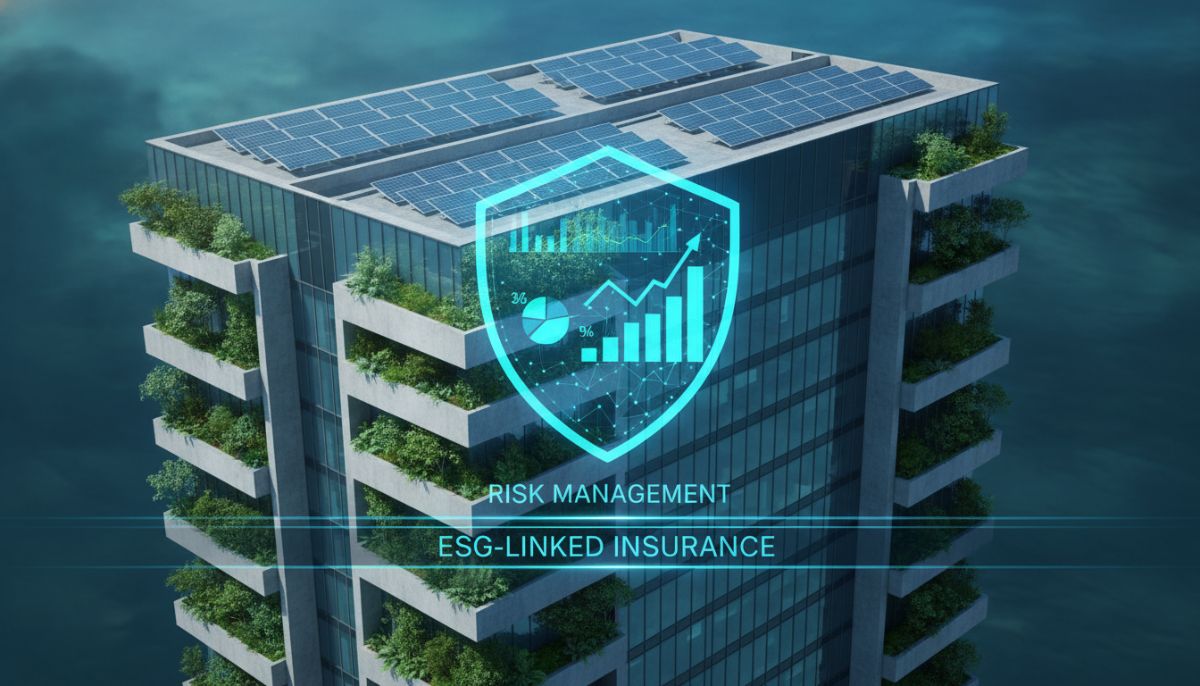
Benefits for Insurance Carriers
Challenges in Scaling ESG-Linked Commercial Insurance
Despite its immense promise, the widespread adoption of ESG-linked commercial insurance faces several structural hurdles:
Future Trends and Technological Enablers
The future of ESG-linked commercial insurance is inextricably linked to technological advancement. Several key technologies are poised to accelerate its adoption:
As these technologies mature, we can expect ESG-linked commercial insurance to become the standard underwriting model, rather than an alternative option, paving the way for a more resilient and sustainable global economy.
FAQ
What is ESG-linked commercial insurance?
ESG-linked commercial insurance is an innovative risk management product where policy premiums, deductibles, or terms are dynamically tied to the policyholder’s performance in Environmental, Social, and Governance (ESG) areas. Meeting predefined targets rewards the company with lower premiums.
What kind of KPIs are used in ESG-linked commercial insurance?
KPIs can span all three ESG pillars. Examples include reduction of carbon footprint (Environmental), reduction of workplace accidents or improvement in diversity ratios (Social), and implementation of robust anti-corruption or cyber-security frameworks (Governance).
How do insurers prevent greenwashing in these policies?
To prevent greenwashing, insurers rely on strict, independent third-party auditors and verified rating agencies to measure and report on the policyholder’s performance. The targets set must be material, ambitious, and scientifically measurable.
Can mid-sized businesses benefit from ESG-linked commercial insurance?
Yes. While initially adopted by large multinational corporations, insurers are increasingly developing scalable ESG-linked insurance solutions tailored for small and medium-sized enterprises (SMEs) to help them integrate sustainable risk management practices early.




Leave a Reply